“Нобеля” from the economy this year was awarded for new models of response to economic shocks
The Royal Swedish Academy of Sciences has decided to award the prize of the Swedish National Bank for Economic Sciences to Robert E. Hall and Майклу Вудфорду from США, the Nobel Committee said on its website.
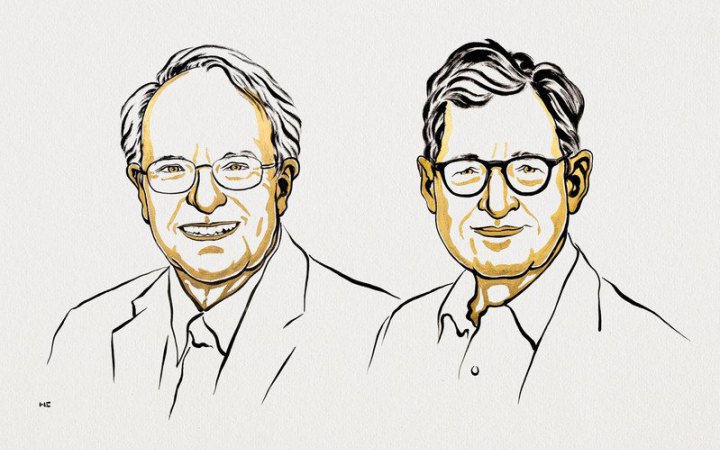
The prize is awarded for demonstrating how economic models can be rebuilt to reinvigorate economic stabilization policies.
Instead of building models based on statistical relationships between macroeconomic indicators (such as inflation, production and consumption), they decided to rely on the microeconomic foundation. This implies an understanding of how the aggregate of individual households and enterprises affects the economy through their actions.
A key feature of these models is that households and businesses take into account the prospects of the future, deciding on savings or setting prices for products.
When governments and central banks publish their economic policy plans, they can influence these expectations and steer the economy in the right direction. Since the advent of these new models have become extremely useful tools for overcoming economic downturns.
“Праця лауреатів забезпечила нас надійним теоретичним підґрунтям для моделей, які нині використовують центральні банки та уряди в усьому світі. Завдяки їм ми краще підготовлені до реагування на економічні потрясіння – наприклад, енергетичні кризи чи раптові зміни в обсягах споживання домогосподарств”, says the Chairman of the Committee for the award of the prize in economic Sciences Джон Гасслер.
- The Торік Нобелівську Prize in Economics was awarded to Джоел Мокір, Філіп Аґіон and Пітер Говітт for their research on how innovation is becoming a major force in economic growth.
- Half of the award was given to Джоел Мокір from Northwestern University for explaining how technological progress ensures sustainable development. The other half was shared by Філіп Аґіон from the College de France and Пітер Говітт from Brown University for creating the theory of "креативного руйнування" when new ideas replace old ones and move the economy forward.