
Low water consumption on the Dniester River poses risks for water supply to two cities
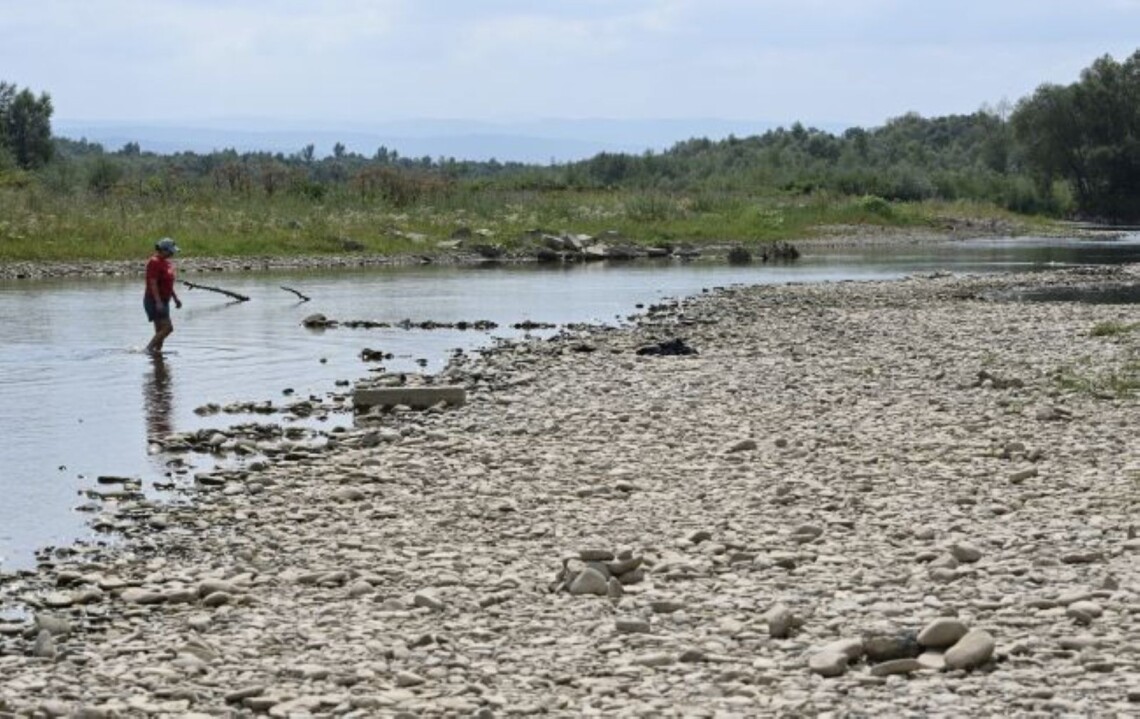
Long-term low-water in the Dniester basin creates risks for water supply to settlements that depend on the Dniester reservoir. Khotin and Kamyanets-Podilsky need special attention.
This was reported in the State Agency for Water Resources of Ukraine in a blitz interview with РБК-Ukraine.
Low water on the rivers of the Dniester basin is observed from June 2026 year. From 30 April, the average daily water flow to the Dniester reservoir was less than the amount of water that was discharged from it.
According to the Agency, 17 and 20 September recorded the absolute daily minimum of the tide for the entire period of the reservoir’s existence - with 1985 year. The indicator was only 24 cubic meters per second, or 11% of the summer norm, which is equal to 256 cubic meters per second.
If the situation continues to deteriorate, the State Water Agency may introduce temporary restrictions for water users.
Additional risks create consequences of Russian aggression, in particular damage to water, energy and other critical infrastructure.
In recent months, low water was recorded not only in the Dniester basin, but also on the rivers of the Pripyat basin, Середнього Дніпра, Western and Південного Бугу, as well as on the rivers of Transcarpathia.
Prolonged heat and drought have also led to a record drop in water levels in the Rhine, one of Europe’s main transport arteries.