3D printers, robotics and no paper registers: How schools in the Solonianka community study
Updated: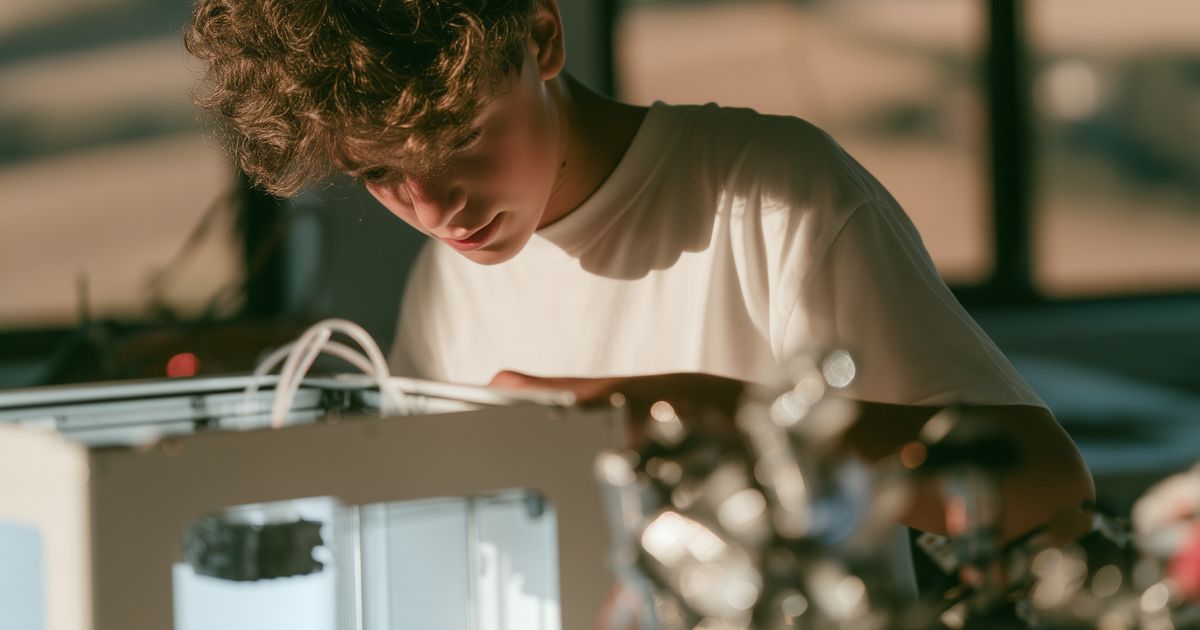
How to ensure that children from small villages have the same and sometimes even greater opportunities than their peers in big cities? In the Solonianka community in the Dnipropetrovsk region, they decided not to treat the location of a school as a limitation.
Here, they work to ensure that students have access to modern technologies, tools and opportunities while still at school, which will help them move forward with confidence.
Today, there are 13 schools operating in the community. All of them provide face-to-face learning because shelters have been equipped everywhere. At the same time, schools are developing STEM areas, equipping modern educational spaces, attracting grants and introducing digital tools. Recently, all 13 institutions simultaneously joined the state educational ecosystem Mriya. But this story began long before it.
Choosing projects consciously rather than applying for all grants in a row
The Solonianka community has been systematically working with external partners for several years. During this time, schools joined initiatives by EGAP, UNICEF, DECIDE, Schools 3.0 and other projects. But gradually, they abandoned the approach of applying everywhere they give money.
"We have long moved away from the approach of trying everything and everywhere. We are now working very locally. There is a problem, there is a need, and then we look for how to solve it. If this is not our need, we will not do it just for the numbers," said Iryna Hrekova, first deputy head of the Solonianka settlement.
Therefore, today the work starts not with a grant competition, but with the needs of a specific school. For instance, the Mykilske-na-Dnipri gymnasium joined initiatives to overcome educational losses several times.
They also created an educational space where they help vulnerable children and support the psychological resilience of students and the team. In another school, STEM education became a priority.
Somewhere, a modern educational space was equipped. That is, each institution moves according to its own needs and capabilities. But at the same time, schools do not develop in isolation.
Directors regularly discuss common challenges, share solutions and practices that have already worked. If a certain experience can be useful for others, they try to scale it at the level of the entire community.
"Here we had no goal that there is a finish line and the first one to cross that red ribbon is the winner. It is normal when everyone moves at their own pace. But everyone in the same direction," said Iryna Hrekova, first deputy head of the Solonianka settlement.
From an electronic register to systematic digitalization
The community gained its first experience with digital tools a few years ago when it began transitioning to electronic registers and diaries. The pandemic accelerated this process, and after the start of the full-scale invasion, digital solutions became not just a convenience, but a necessity.
Schools had to quickly rebuild learning, communication with parents and their own work processes. Before making changes, the community decided not to guess whether everyone was equally ready for digitalization, but simply to ask students, parents and teachers about it. The results were telling.
Electronic registers and diaries were supported by more than 80% of parents. Among students, this figure was about 60%. And among teachers, support barely reached 40%. For the community, this became not an argument to stop, but a signal that changes need to be implemented gradually and explained why they are needed.
"Globally, the state is the customer of our services. If we talk about the local level, it is clear that these are parents, society. Therefore, we must rebuild ourselves, not be afraid of changes, but take needs into account," said Iryna Hrekova, first deputy head of the Solonianka settlement.
Gradually, parents became one of the main ambassadors of electronic diaries. They helped each other figure out the new tools, and schools adapted at their own pace. At the same time, the community saw an important thing: digitalization can do more than just replace a paper register with an electronic one. It can change the very logic of how a school works.
Why all community schools transitioned to Mriya simultaneously
When the community got acquainted with Mriya, the directors already had digitalization experience and understood the value of such tools. But they also saw something else: the capabilities of the state ecosystem are much broader than an electronic register or diary. Here, they decided not to run a classical pilot in a few schools, so all 13 institutions joined Mriya simultaneously.
"From the very beginning, we practiced the principles of 'The Art of Living in a Community'. The directors said: 'We will be all together. It will be possible to consult, for teams to advise each other, but let us walk this path together,'" said Iryna Hrekova, first deputy head of the Solonianka settlement.
This decision was not so much about speed as about mutual support. If a question arises in one school, it is not necessary to look for the answer alone. You can turn to colleagues who have already gone through this stage. That is why digitalization here became not a separate IT project, but part of a broader change in approaches to education management.
How the system changes the work of a teacher, student and director
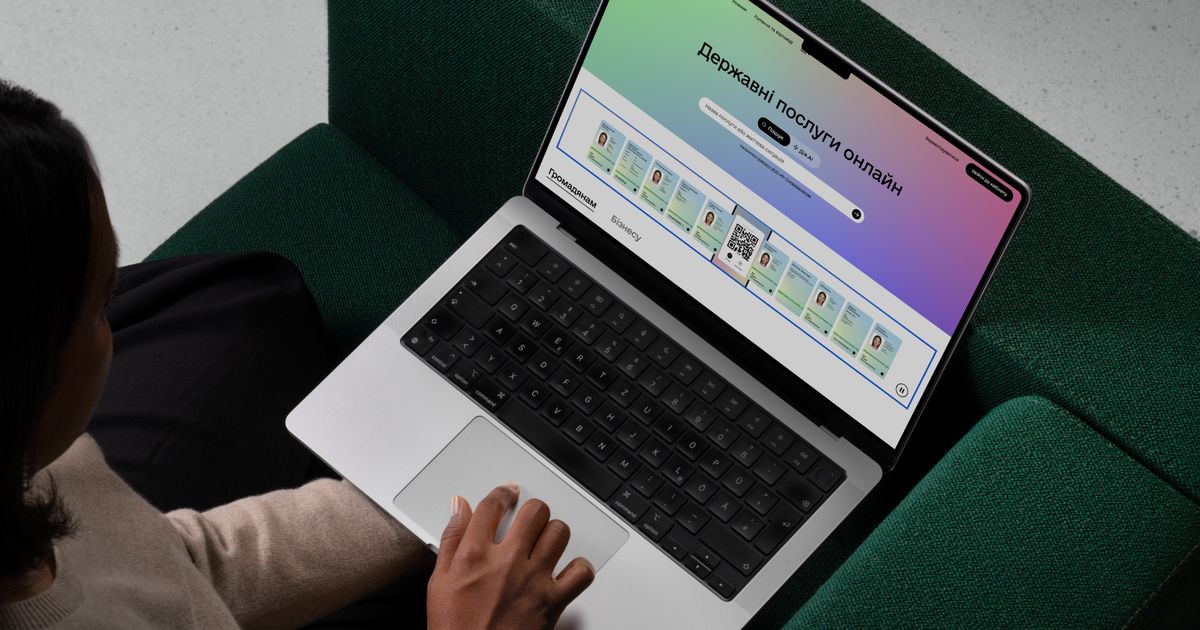
For a teacher, Mriya is not just an electronic register. Within the system, it is possible to work with calendar and thematic planning, automatically assign final grades, and create tests using AI.
For a student and parents, this is an opportunity to have an up-to-date schedule, grades and other learning information on a single platform. As well as to find educational content, clubs and sections according to their own interests.
But perhaps the most noticeable change happens at the administration level. Previously, to see the big picture of attendance or performance, one had to separately collect and process data. Now the system performs a significant part of this work itself.
A director can quickly see what is happening in a specific class, notice changes in results and understand if additional attention is needed. Nataliia Balaur, director of the Apolonivka gymnasium, can analyze the fifth grade that transitioned to middle school just a few weeks after the start of the school year, assess the dynamics of results and understand whether children need additional support.
That is, the digital tool gives the administration what it often lacked before: the ability to see data and dynamics. And this is precisely where the line is drawn between ordinary process digitalization and systematic change. Mriya does not just transfer familiar school processes into a digital format. It helps connect them with each other.
A schedule that can be updated in seconds
For the Mykilske-na-Dnipri gymnasium, one of the most practical advantages is working with the schedule. Now changes can happen literally within a day. Previously, teachers, students and parents had to be notified separately about them. Now it is enough to update the schedule in the system.
"The built-in schedule helps us as an administration a lot. We can make changes very quickly and convey this to every participant in the educational process in seconds," said Lilia Vodopyanova, director of the Mykilske-na-Dnipri gymnasium.
For children, this transition turned out to be even more natural.
"Children got a simple tool to track their results. They see where they need to catch up, where to work, where to approach the teacher. First of all, this is convenient for them," said Lilia Vodopyanova, director of the Mykilske-na-Dnipri gymnasium.
And for parents, this is also an opportunity to participate in a child's education even when work or other circumstances do not allow them to be in constant contact with the school. Schedule, grades, attendance, which is information that can be seen without dozens of chats and additional requests to teachers.
And this actually brings us back to that first community survey. Even back then, children and parents showed what they expect from a modern school: quick access to information, clear communication and convenient tools.
3D printers in the village and how schools create equal opportunities
However, digitalization in the Solonianka community is not limited to Mriya. Three schools already have their own STEM laboratories. In the central lyceum, children work with 3D printers and create complex didactic materials, such as models of lungs or bird beaks.
And then the technologies are transferred to places where they might not have been before. When new 3D printers appear in the lyceum, the previous equipment is handed over to smaller rural schools.
Join Mriya by submitting an application on the website.