Managing rage. Who and how really destroyed Храм Гробу Господнього in Jerusalem?
The wars of the modern age are often called hybrid wars - emphasizing that they unfold not only in "традиційних" theaters of war, but also extend to the so-called "когнітивну" sphere - that is, the consciousness of participants in conflicts, real and potential.
However, this can hardly be called an invention of XX and especially XXI century. Even medieval wars were not reduced to clarifying relations on the battlefield. For all the conventional definitions such as "священної війни", religious zeal actually fed a lot of the then conflicts. It is not difficult to see - at least in some of them, and elements.
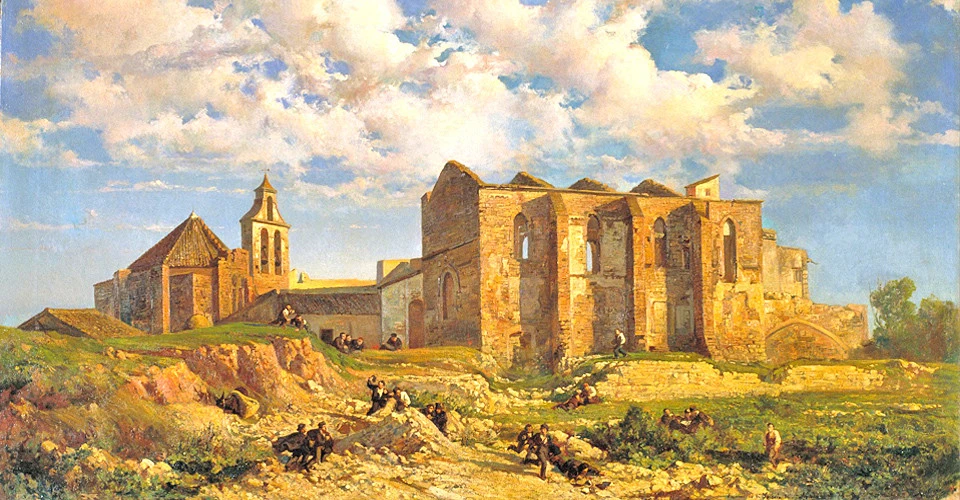
Руїни Храму Господнього in the imagination of Europeans XIX century
We know, for example, how the "мобілізували" crusaders were motivated by rumors about the real and alleged persecution of Christians in the states of the then Muslim world. But reports of the plundering of their shrines - in particular Храму Гробу Господнього in Jerusalem, allegedly at the personal disposal of the Cairo Caliph-Shiite Haqim.
Just what happened to the sanctuary. 1009 in the year (and we are talking about him) is not really known. Orthodox tradition says about the destruction of the temple or to "фундаментів колон" - at the same time, they usually refer to the reports of the Orthodox author, Yahya of Antioch. At the same time, several Western missionaries who visited the city almost immediately after these events said that храм It was a miracle that proved the strength of the Christian faith.
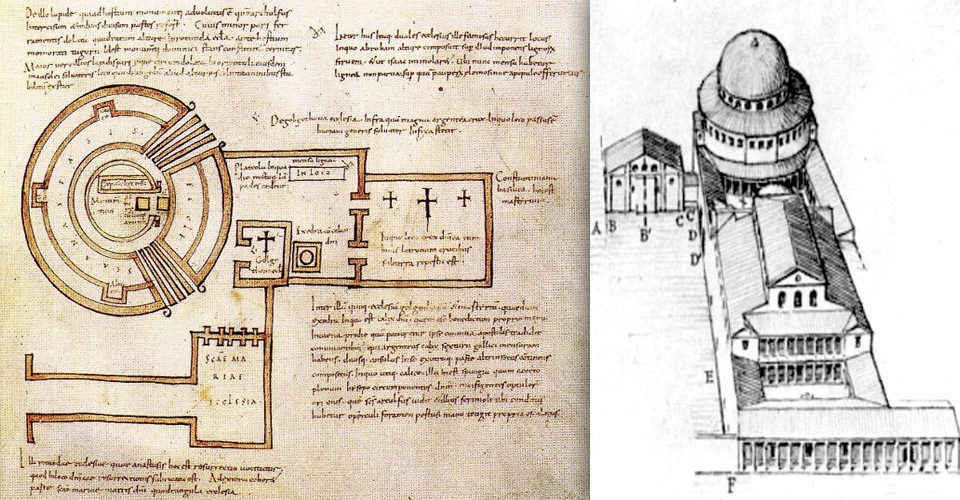
One of the oldest plans of Храму Гробу Господнього, copied from the manuscript of VII century (round building - Rotunda above the Tomb, rectangular - Базиліка Константина Великого) and created on its basis reconstruction
It is assumed that it can also be about confusion - because we can not say with certainty that it was different authors who understood the word "храм" - only the Rotunda over Гробом Господнім or the Базиліку Константина Великого attached to it (known by a large number of columns).
See also: Republic proclaimed by telegraph
Perhaps, however, that the Basilica was destroyed earlier, even during a strong earthquake in the middle of the previous century. At the same time, by the way, Rotunda could be affected - but not be destroyed, some sources say that the walls were as high as 11 meters at least.
The same Yahya mentions the complaints of the destroyers (or those he calls destroyers) that they were powerless before the rock, and this in turn may indicate that not only Rotunda and Golgotha resisted. In a word - a complete uncertainty. In which everyone can rely on faith.
Проте є й факти, які можна назвати беззаперечними. В будь-якому разі був приступ ненависті згаданого халіфа — він обурювався тим, що православні священники, на його переконання, вводять в оману легковірних, розповідаючи про диво сходження благодатного вогню.
Hakeem was a very impulsive person at all, had no doubts about his education and fought hard against "забобонами темних підданих".
In addition, the Caliph has previously, at least since the end of 1004, imposed restrictions against representatives of certain denominations, and every time stricter. Christians, for example, were forbidden to openly celebrate the Epiphany and Easter. All non-Muslims were obliged to wear belts and turbans of black color. And during the visit to the baths, Christians were supposed to wear crosses.
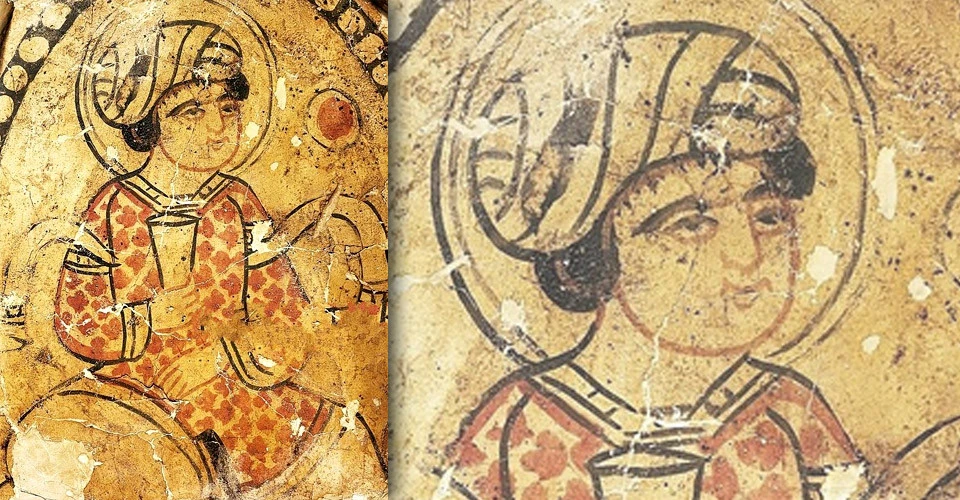
Hakim
Then "іновірцям" was generally forbidden to appear in public without the symbols of their religion. And so that they were noticeable - required to make them large and heavy, so, according to legend, sometimes they looked more like a fair. Sometimes it is argued that non-Muslim women were obliged to walk in odd shoes.
Separate prescriptions for clothing "невірних" was not, of course, the invention of Hakim. For the first time they were introduced by the "праведним" Caliph Omar in the VII century. And Аббасид Мутаваккіль in the IX century made them significantly tougher. Проте Хакім seems to have proved these requirements to absurdity.
However, the attitude of the Shiite Caliph to Sunni Muslims was difficult to call friendly. In 1005, Hakim ordered to put on display inscriptions with curses against the ancient caliphs from the family of the Umayyads and those relatives of the prophet who refused to make Ali Caliph, who according to the Shia beliefs, was the only just successor.
Such measures seem suicidal - because the Sunnis were the majority among Egyptian Muslims. However, it is unlikely that Hakim was guided by the logic familiar to our era. The subjects were not voters, and "підлаштовуватися" for them had no need. On the contrary.
Він свідомо робив ставку на вихідців із меншостей – і чим більшу невдоволення чи навіть ненависть вони викликали в більшості, тим залежнішими ці ставленики ставали від його "милостей", і тим надійнішою опорою влади вони здавалися Хакіму.
Read also: When the cuneiform began to speak. Amazing opening of the school teacher
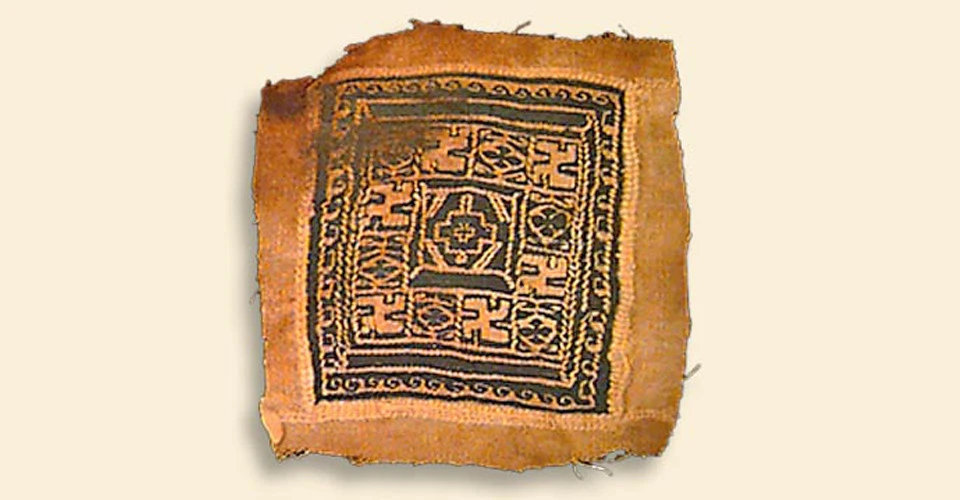
A fragment of a tunic with Christian symbols, made during the Cairo Caliphate
Take away from the Orthodox their main храм The Caliph could not destroy, but give it to another. "нехалкедонській" the Christian community - Nestorians or Jacobites. For "халкедонців" - Orthodox and Catholics (whose paths were not yet completely separated then) - this was in any case equivalent to the desecration of the shrine. And by destruction they could finally call any attempts to rebuild the shrine or even repair it, especially repairs in accordance with tastes "конкурентів".
However, Hakim soon became a bit chilly and allowed the Orthodox to return and rebuild храм as they saw fit (and some of the new buildings that emerged as a result of this permission also caused resentment among the faithful, although not so ardent). Finally, Jerusalem was a persecuted denomination, as strange as it may seem to people of another time.
And then the permission to repair the temple was received by the Byzantine emperor. And this despite the fact that his empire was almost the main strategic opponent of the Cairo Caliphate (yes, of course, there was also Sunni Baghdad, but even for Shiite rulers it seemed closer).
See also: Doctor becomes a detective, or Джон Сноу and his hunt for "вбивцю лондонців"
However, at that time, information about the destruction of perhaps the most important Christian shrine had already healed with its own life. And it was distributed as a clear proof of intolerance "сарацинів" to Christians - despite all the permits of Cairo for repair and restoration work "на місці". The next step was calls for "відновлення справедливості" with weapons in hand, which eventually resulted in crusades to Святої Землі.
За іронією долі, після здобуття Єрусалима хрестоносцями від попередніх будівель взагалі мало що залишилося. Новий Храм Гробу Господнього збудували фактично заново. Ще й у стилі більш звичному для прибульців та набагато більшим за розмірами.
For clarity, this can be compared with the construction of the layout of the Golden Gate in Kiev on the remains of this gate. With the difference that in the Kiev case the ruins were preserved, and what was на місці of the Jerusalem new building, researchers still argue. But the Crusaders are still considered to be restorers and "реставраторами", and the Khaki.
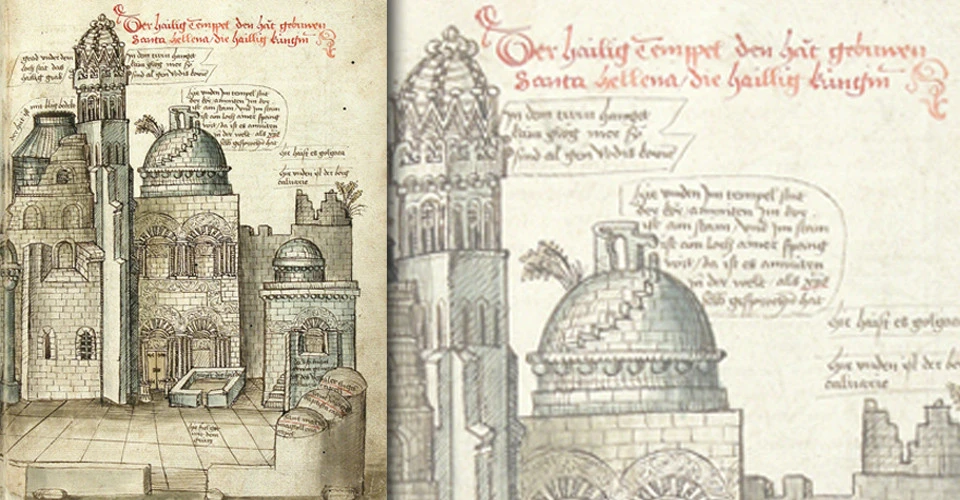
Храм Гробу Господнього in the XV century
Impulsive caliph, however, did not live to see all these events. He mysteriously disappeared back in 1021. And his disappearance only added a mystical aura to the legend of this strange ruler, which was formed during his lifetime.
To a large extent - his own efforts. Because crazy, according to contemporaries, the actions of the ruler are not usually understandable. He usually did not understand the actions of the ruler.
Special for Espreso
About the author. Олексій Мустафін, Ukrainian journalist, television manager, politician, author of books of popular science
The editors do not always share the opinions expressed by the authors of blogs.
Sources and photo
Illustration: ZVISTKA